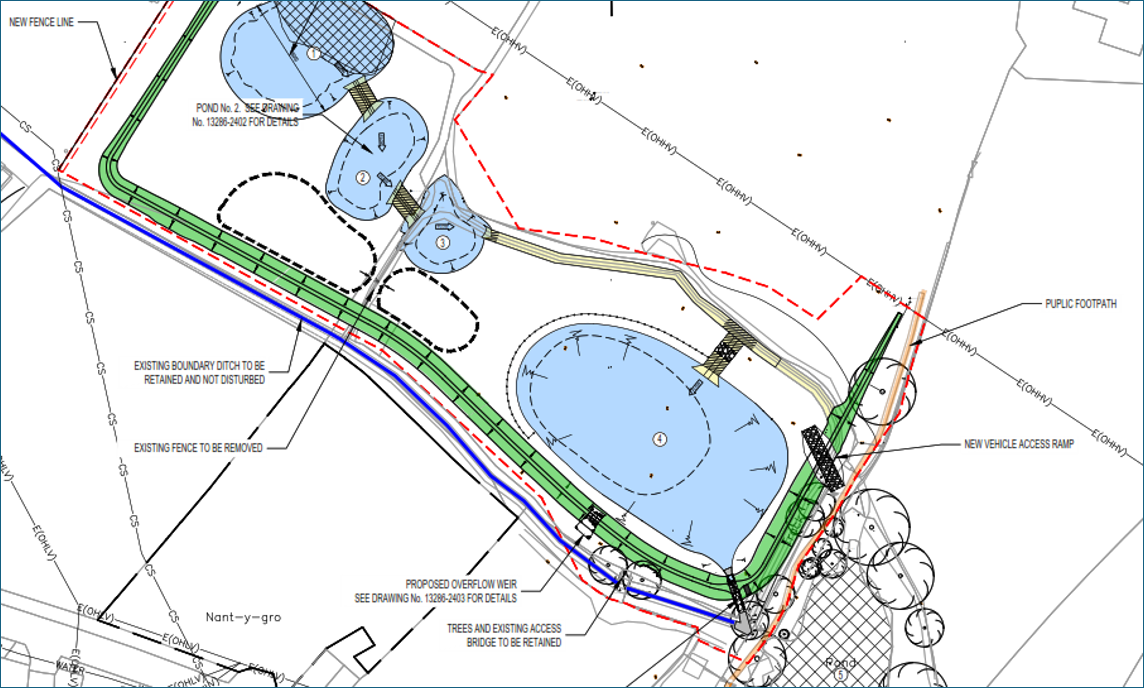
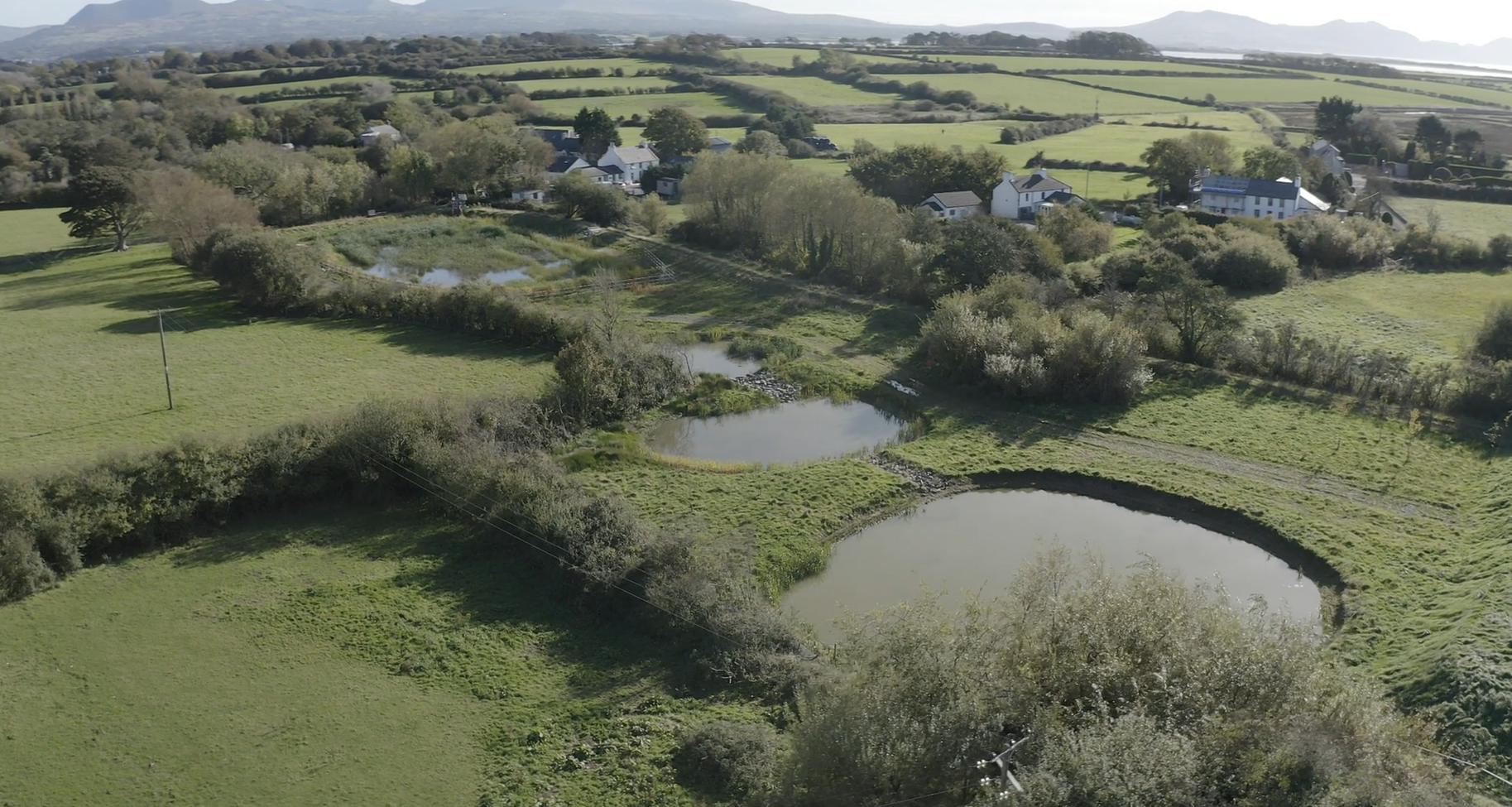
The Isle of Anglesey County Council, supported by Waterco Datrys, launched a Natural Flood Management (NFM) pilot in Dwyran, North Wales, with site work carried our by Alun Griffiths Contractors. This initiative, funded by the Welsh Government, aims to reduce surface water flood risk while enhancing biodiversity.
The area has a history of flooding during heavy rainfall and high tides, with previous events causing internal damage to multiple properties. The pilot forms part of a national NFM research program.
The existing drainage arrangement comprised of a series of open channels (streams), which are fed by natural two springs and rainfall. In normal conditions, the open channel network in the study area drains to the existing pond in the eastern extent of the study area and then is partially culverted under the A4080 highway to the south-east and directed to the Afon Rhyd y Valley beyond. The drainage at the base of the catchment is partly linked to the Afon Braint to the west.
Isle of Anglesey County Council
Natural Flood Management (NFM)
2020-25
Dwyran, Llanfair PG
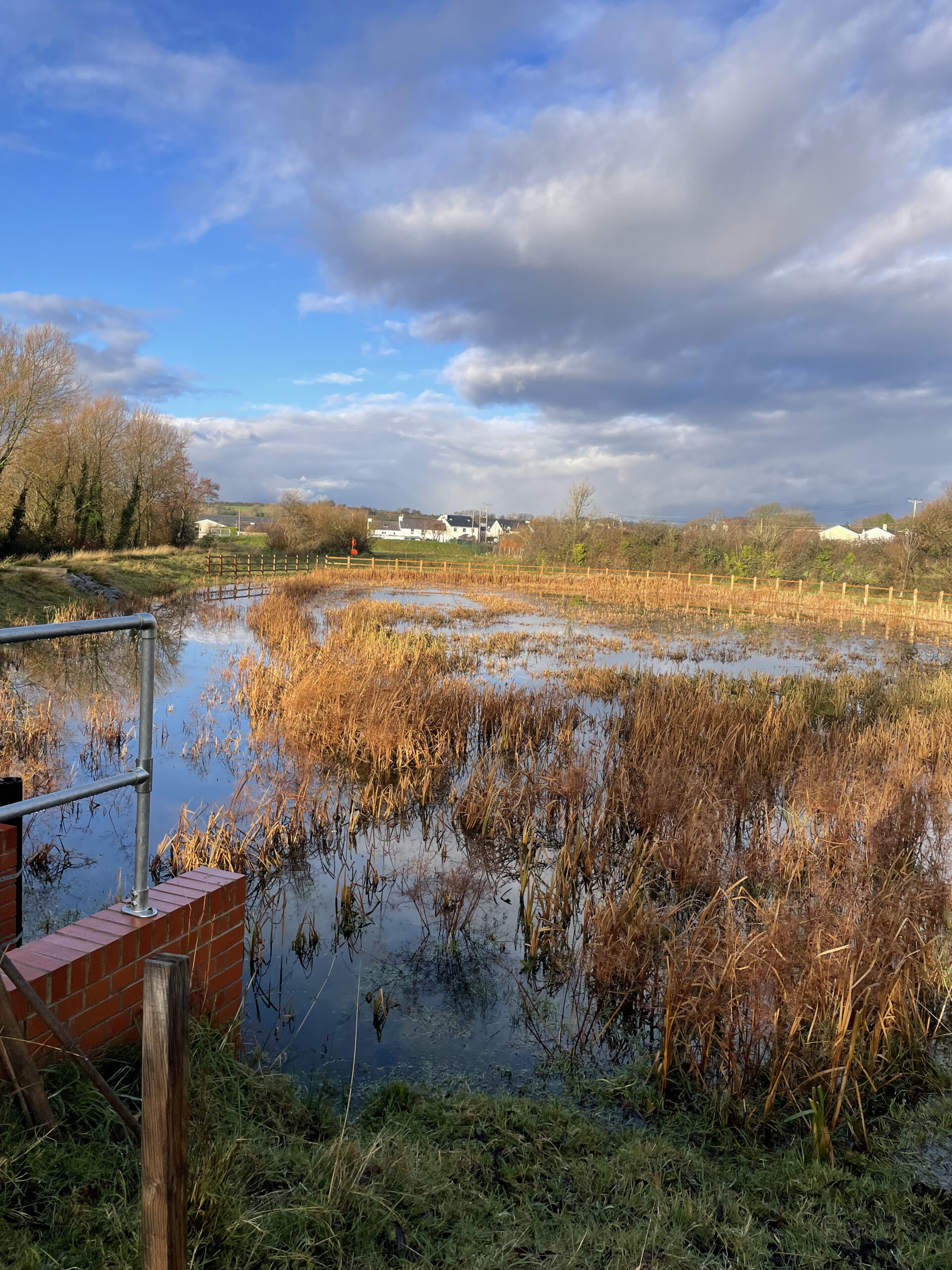
During heavy rainfall events, the capacity of the open channels in the study area are known to exceed with ponding at the surface posing a risk to several properties. Exacerbating this known issue, the open channels are tide-locked and the combination of a heavy rainfall event and a high tide is known to result in flood water extending onto the floodplain and causing internal flooding to properties.
As a result of the risk, two Flood Investigation Reports (FIR) were prepared by NRW in 2015 and 2017. The 2015 FIR confirmed that five properties flooded internally as a result of Main River and surface water flooding. The 2017 FIR confirmed that thirteen properties flooded internally from the same flood sources as the 2015 flood event, although to a greater extent. During each event, the study area is reported to have flooded.
To address the recurring flood issues, an optioneering exercise was undertaken to assess the catchment and identify suitable interventions. The study area lies near the Menai Strait and includes six sub-catchments draining into existing channels and ponds. The approach focused on nature-based solutions that work with the landscape to slow and store water, reducing flood risk without relying solely on hard engineering.
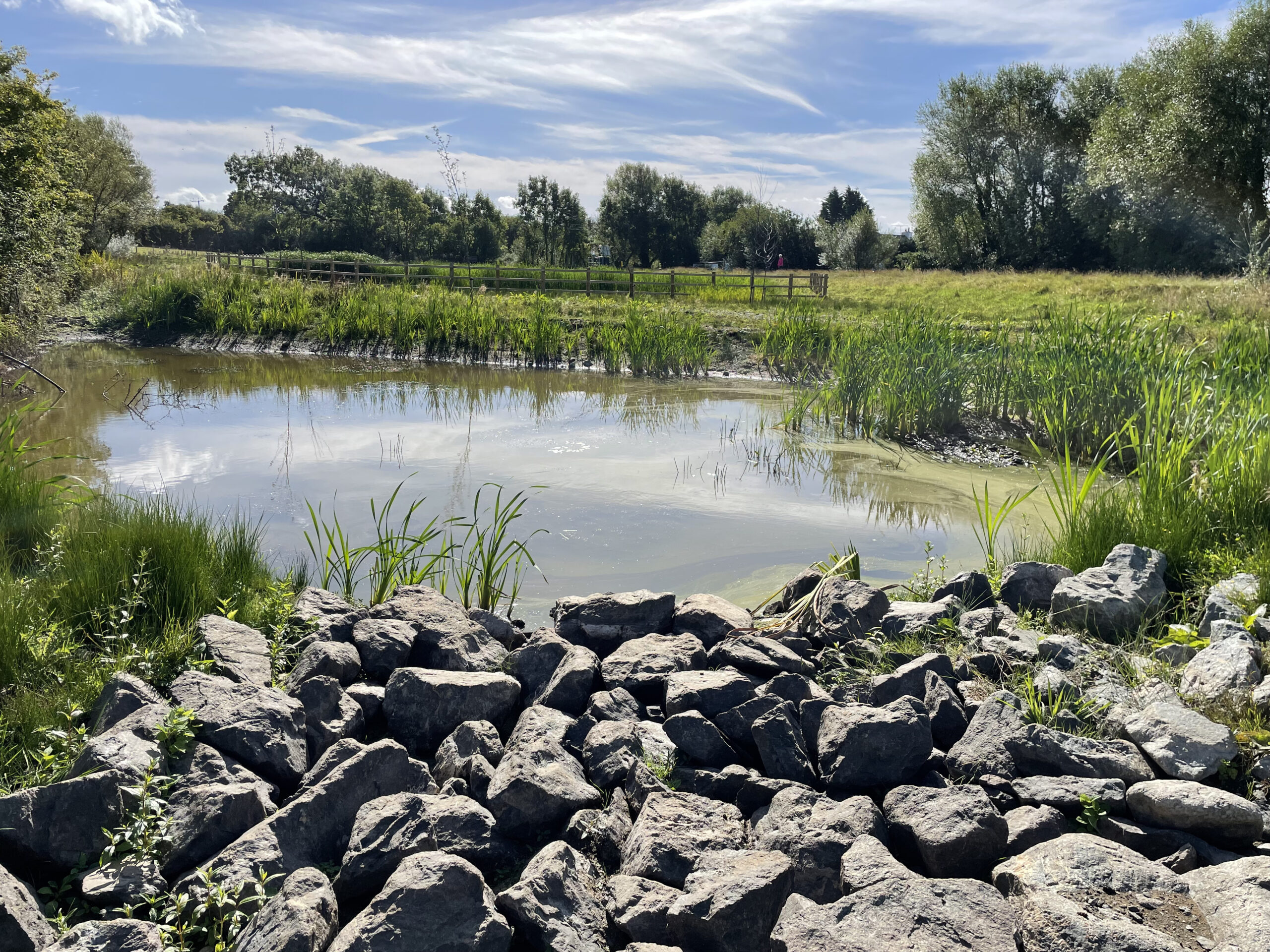
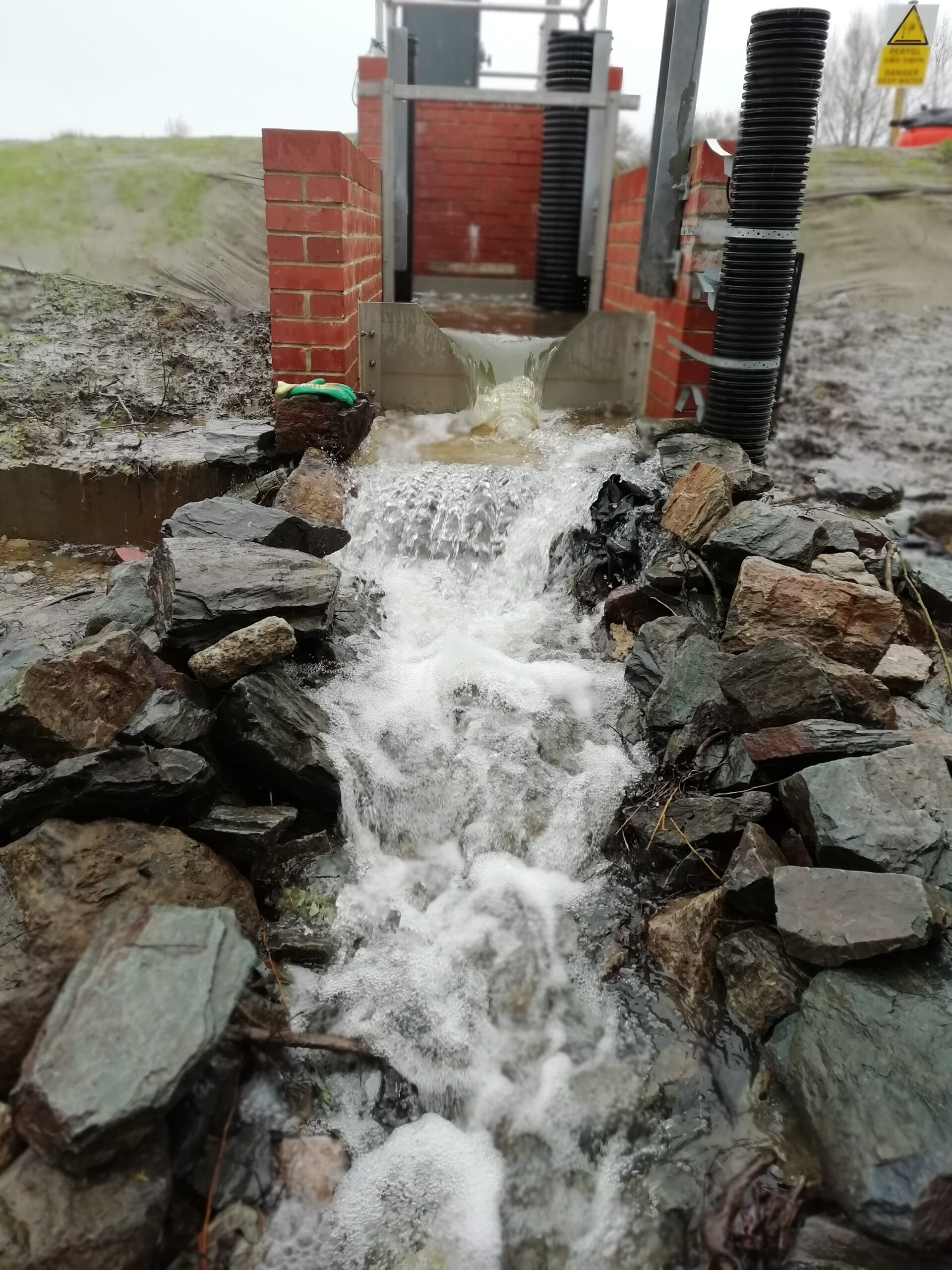
The chosen intervention consisted of earth bunds, ponds, and connecting channels designed to intercept floodwater and create a permanent wetland area to enhance biodiversity. Drainage channels were modified to direct surface water flows toward the main bunded area.
While the scheme cannot eliminate all flood risks, it aims to reduce the flooding in the south-eastern extent of the study area. Post construction the study area is intended to be maintained as a wetland area to enhance biodiversity and will be planted with wetland vegetation and plants.
Monitoring Year 1
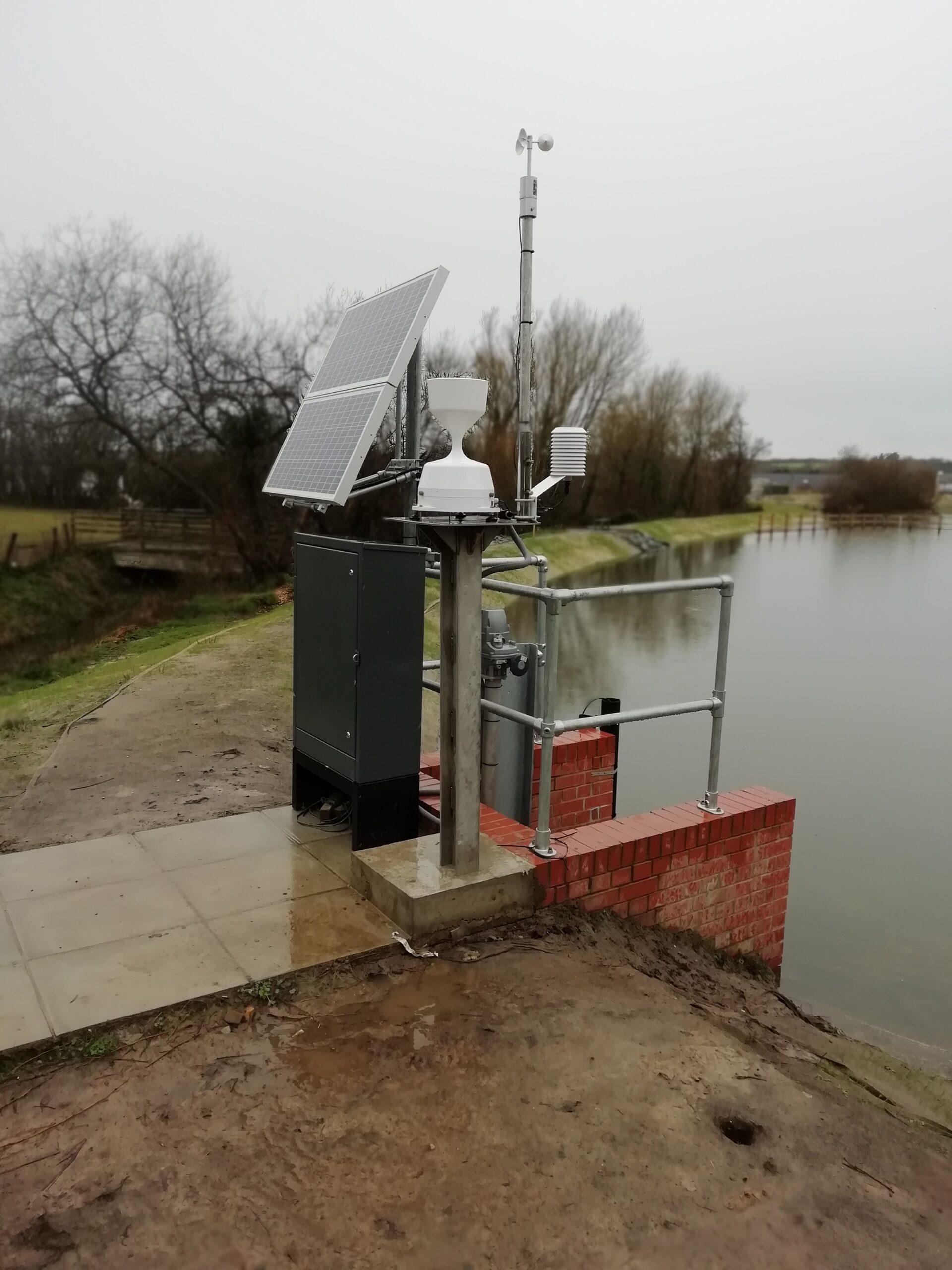
The NFM Pilot Project in Dwyran began in 2022 with a three-year monitoring program starting in 2023 using telemetry systems like rain gauges and water level sensors. The scheme, featuring four ponds and an automated penstock, successfully reduced flooding during storms.
Technical issues arose, including sensor failures, solar power limits, signal dropouts, and penstock malfunctions, mostly due to control logic and power constraints. These have been partly resolved through relay installation and system adjustments. Overall, the pilot is effective, but further improvements are needed for reliable automation and data integrity.
Monitoring Year 2
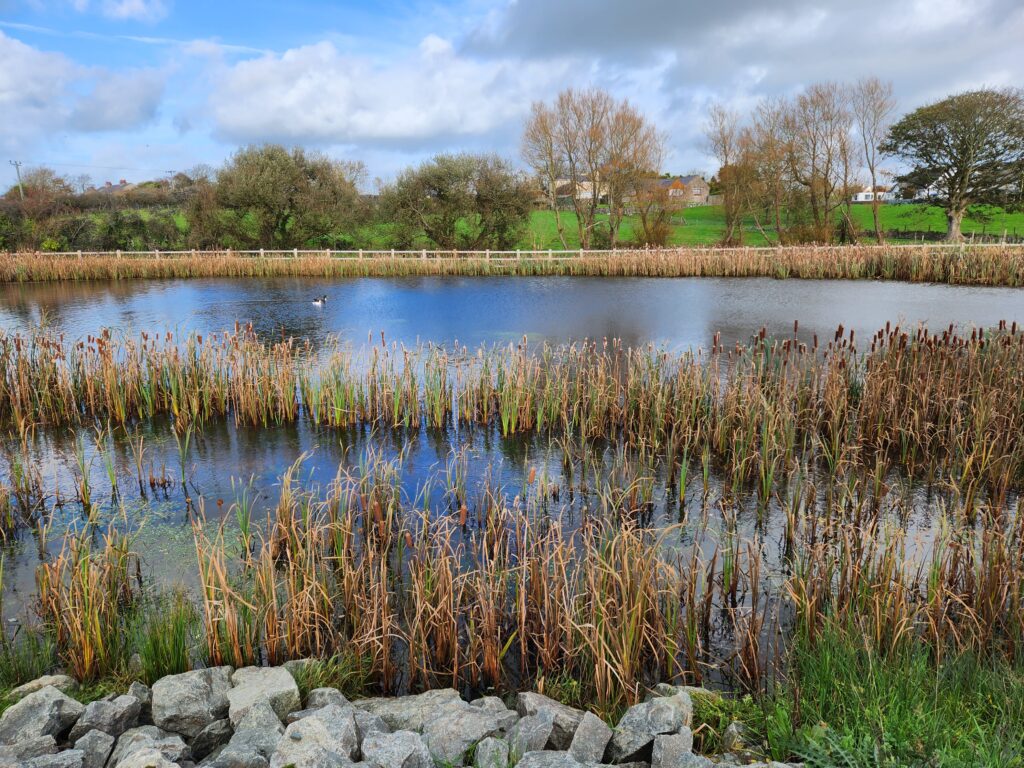
Despite 30% less rainfall than Year 1, Pond 4’s average water level rose to 246 mm due to prolonged penstock closure. No downstream flooding occurred, confirming system resilience. Biodiversity improved with swans, herons, kingfishers, and red squirrels observed.
Challenges included algae buildup, bullrush infestation, and fewer dragonflies, likely from stagnant water. Monitoring devices worked well, though wind data collection stopped. Recommendations: regular maintenance, manage vegetation, and consider a fountain to improve water quality and aquatic life. The scheme continues to meet flood mitigation goals and deliver ecological benefits.
Our Work